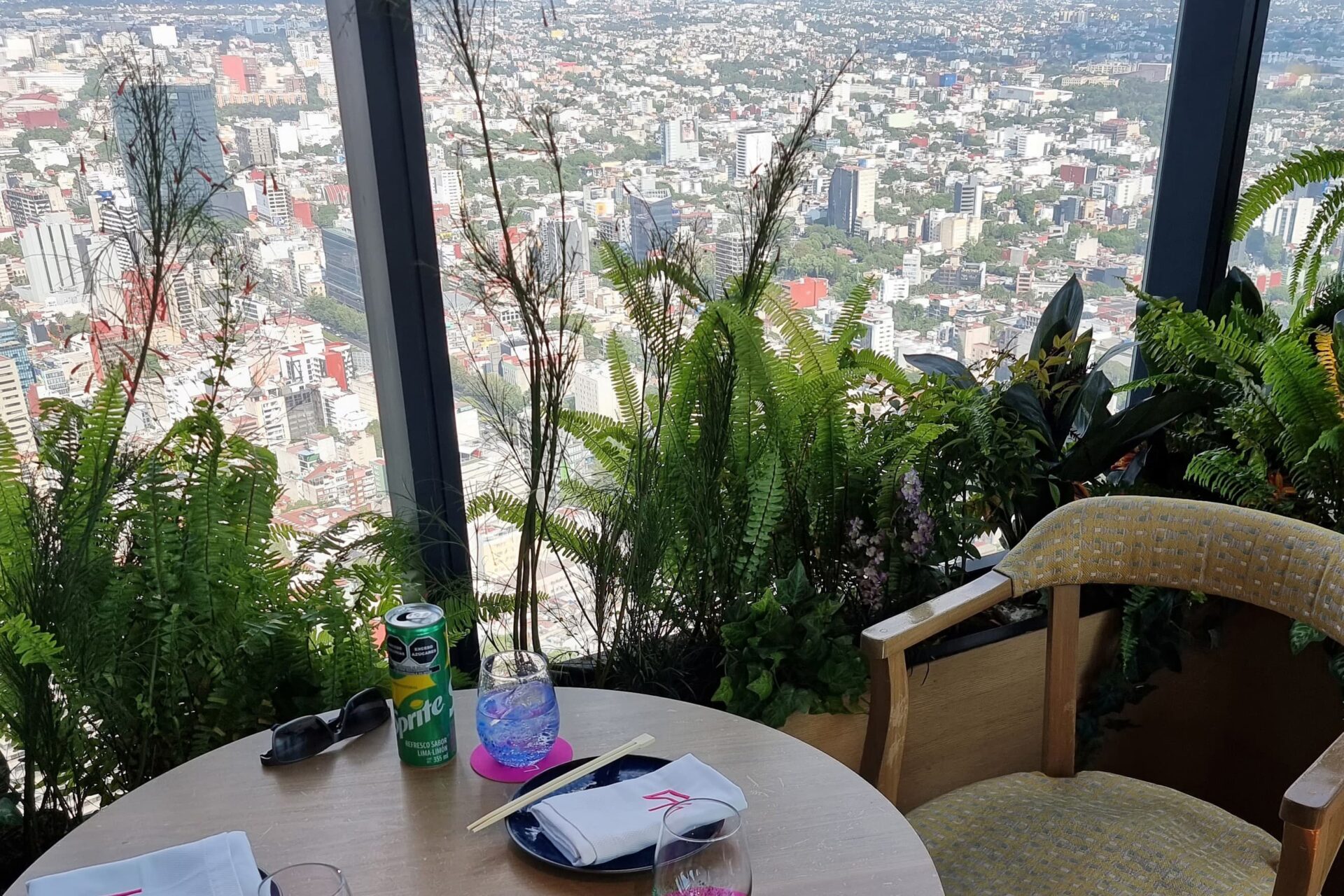

Mexico City is one of those rare places that reveals new layers every time you return. Two days gives you a taste. Two weeks shows you how much you’re missing. I’ve lost count of my visits and I’m already planning the next one.
Two days gives you a taste. Two weeks shows you how much you are missing. Mexico City keeps revealing new layers, no matter how many times you return.
How I went from thinking CDMX was ‘just another big city’ to realizing it’s endlessly layered
I’ve made this mistake with cities before. Barcelona front-loaded everything — gave you its best face immediately, and didn’t have much more beneath the surface. Mexico City did the opposite. I thought a couple of days would cover it.
My First Glimpse: Brief and Superficial
My first visit was for work. I was there a couple of weeks but barely escaped the office. I managed a tour to the Teotihuacán pyramids, dinner in Zona Rosa, and an afternoon at a market. Snapshots. I didn’t have the time or context to understand what I was seeing.
I also didn’t have the right expectations. I thought of Mexico as third world back then, or second world at best. The idea that a Mexican city could rival European or American cities in sophistication, culture, or culinary excellence simply wasn’t in my framework.
I left thinking I’d checked the box.
The Awakening: Polanco Shatters My Assumptions
It was a few years before I returned, again for work but with more control over my time. I stayed in Polanco and was genuinely shocked. The boulevards were elegant, the restaurants impeccable, the service assured. This wasn’t the Mexico I expected. And when I stepped inside the buildings, it was something else again. I found a contemporary luxury so confident it didn’t need to announce itself.
I began to realize my assumptions about Mexico City and about Mexico itself had been provincial and uninformed. This was a world-class metropolis, not some developing-world capital I could breeze through in a weekend.
The Deep Dive: Discovering Endless Layers
On my third visit, the first night in Mexico City told me nothing. I arrived in Roma Sur late, dropped my bag, found a table at the restaurant next to the hotel. The food was fine. I went to sleep. It had been a long day.
A friend lives in Condesa, a ten-minute walk away, and we agreed to meet in the morning at Foro Lindbergh, a plaza in Parque Mexico. Simple enough. I crossed Avenida Insurgentes Sur, six lanes of buses and noise and diesel.
Suddenly, the city disappeared.
Not gradually. In one block. On that side of Insurgentes, Mexico City in full voice. On this side, a residential street quiet enough to hear your own footsteps. Half-convinced I’d taken a wrong turn, I kept walking and reached Amsterdam, a boulevard with a long planted walkway running down its center, shrubs and trees arching overhead to form a canopy. Women pushed strollers. Two elderly women sat on a bench deep in conversation. A man jogged past without looking up. Was I still in Mexico City?
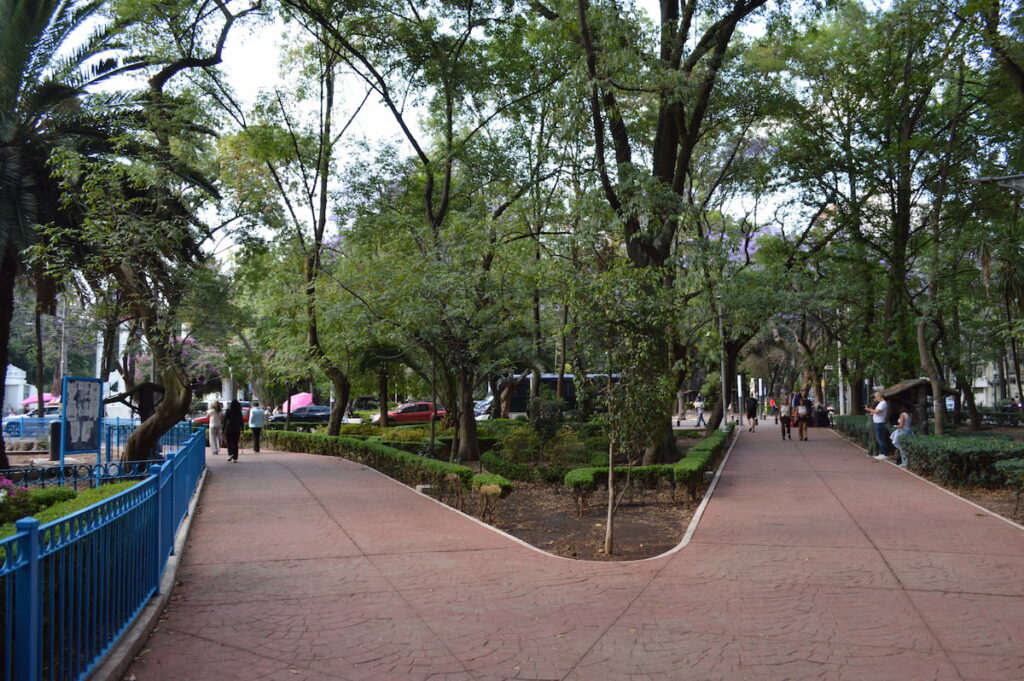
Another block and I entered Parque México, shaded from the morning sun by an old tree canopy, brick paths lined with wrought iron fencing. Beyond the fence were two dog parks, one for large dogs, the other for small, with a sign at the gate to remind you which was which. Inside, a dozen or more dogs were running, circling, greeting each other with the focused enthusiasm of people at a cocktail party. Their owners sat on benches talking to one another, completely ignoring the dogs. And here is the thing I couldn’t quite explain: it was quiet. No barking. No growling. Just dogs and people meeting their friends on a Tuesday morning.
Walking the length of the park, I realized I felt something I was not expecting. Refreshed.
A few restaurants and shops were just opening as I continued, now following the curved edge of the park.
I reached Avenida Michoacan, the only road that crosses the park. On the other side was the wide plaza of Foro Lindbergh. My friend’s apartment was only a few blocks away, but Mexicans have a relaxed relationship with punctuality. I found my place on the wall, sat down in the shade, and watched the plaza.
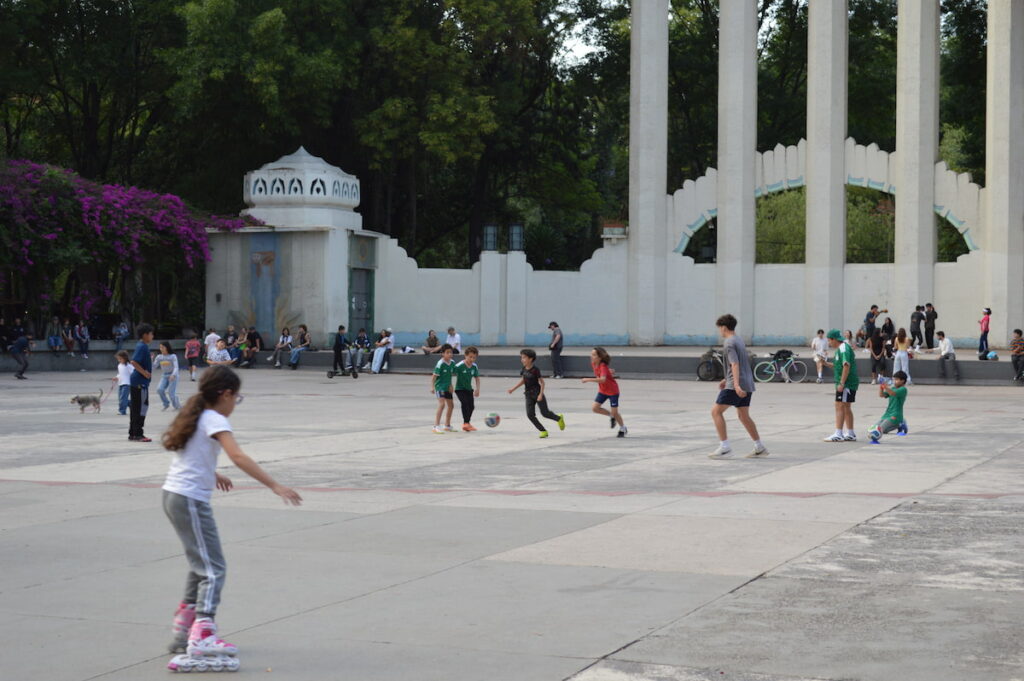
A handful of boys kicked a ball around part of the plaza with no particular structure, a skateboarder worked a low ledge nearby, a man tossed a ball for a dog who took a long and circuitous route back each time, in no particular rush for the next throw. Each had their own loose territory, but the edges were soft. The dog’s return path drifted through the fútbol, an errant kick crossed the skateboarder’s line, and nobody paused or complained. Like the dog parks a few blocks back, the plaza held it all without effort. Around me people sat talking, watching their children, enjoying the morning.
About twenty minutes later my friend arrived. I told her the neighborhood was extraordinary. She shrugged, the way people do when they’ve known something for years. “That’s why I live here.“
Now I stay in Hipódromo most of the time, a neighborhood I’ve grown to love.
A Food Scene That Defies Categorization
The culinary range in CDMX is staggering. At one end: streetside taco trucks where the quality indicator is the length of the line. A line you will wait in with lawyers and construction workers. Later, 20-something locals queue up at 11 PM for al pastor tacos that cost a dollar and taste better than anything you’ll find at trendy fusion spots back home.
At the other end: upscale Mexican fusion restaurants reinterpreting traditional dishes with modern technique. Sushi restaurants serving sampling flights of raw tuna. Craft cocktails served on the 58th floor while you overlook the sprawling city below. The variety isn’t just broad. It’s also deep. You could spend months eating your way through the taco landscape alone.
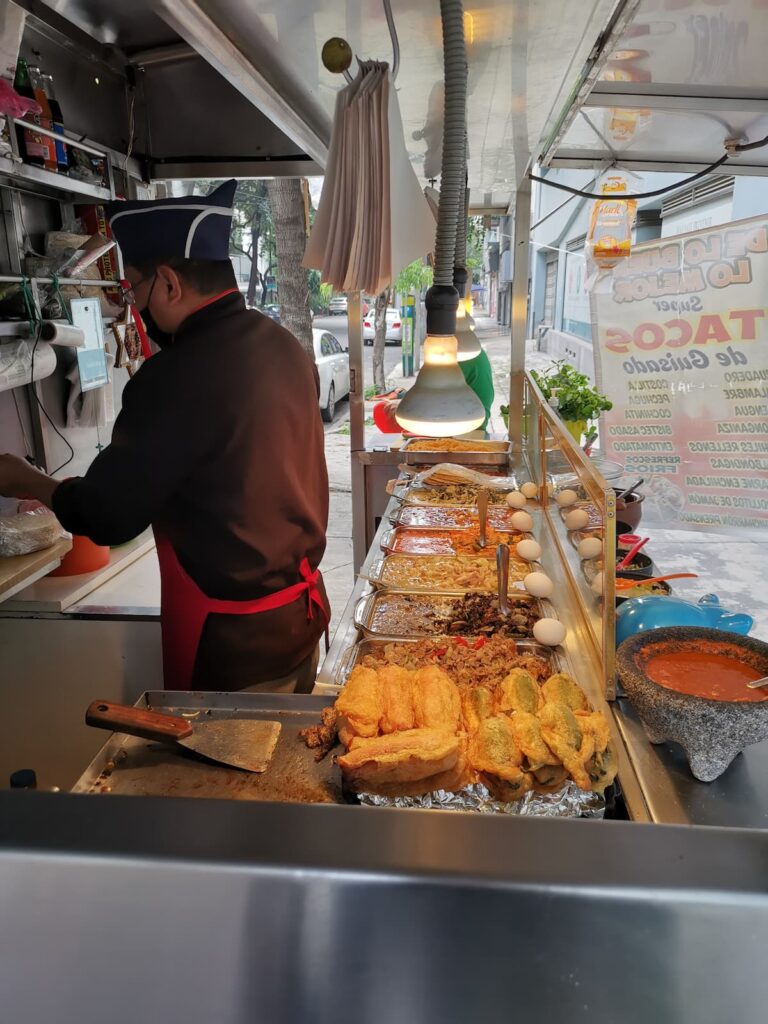
And it’s not just Mexican food. CDMX has absorbed culinary traditions from around the world and made them its own. Japanese, Korean, Lebanese, Argentine – and all executed at a level that would hold up in their origin countries. (My one exception is pizza, they never seem to get the tomato sauce and cheese quite right for me).
Neighborhoods That Feel Like Different Cities
The neighborhoods read like different cities. But the differences aren’t always visible from the street.
In Polanco, I walked past buildings that looked modern and clean. Nice, but unremarkable. Then I went inside. Glass, marble, bold floral arrangements, a sleek contemporary luxury that wasn’t performing itself. It was not old world European, not showy. Just completely confident. I hadn’t expected that from Mexico.
Roma shows you something different again. Professionals walking purposefully in the morning, queuing later for lunch at the better taco stands – the line telling you everything you need to know. Then the same streets filling with locals in the evening. Shopping spaces that appear to be office buildings until you walk through the door and find a full market inside. The city keeps hiding things in plain sight.
I’ve already described what waits on the other side of Insurgentes – the parks, the people, the dogs, the quiet that shouldn’t exist. What I didn’t realize until later was that Amsterdam and Parque México are in Hipódromo, and Parque España is where Condesa begins. I’d crossed between neighborhoods without noticing the boundary. That boundary doesn’t really exist.
Coyoacán and others remain on my list. I’ll report back.
Markets That Demand Days, Not Hours
The local markets in Mexico City aren’t tourist attractions you check off in an afternoon. They’re sprawling labyrinths of commerce, culture, and cuisine. Mercado de la Merced. Mercado de San Juan. Mercado Roma. Each one could occupy you for a full day if you actually want to explore properly, talk to vendors, sample food, understand what you’re seeing.
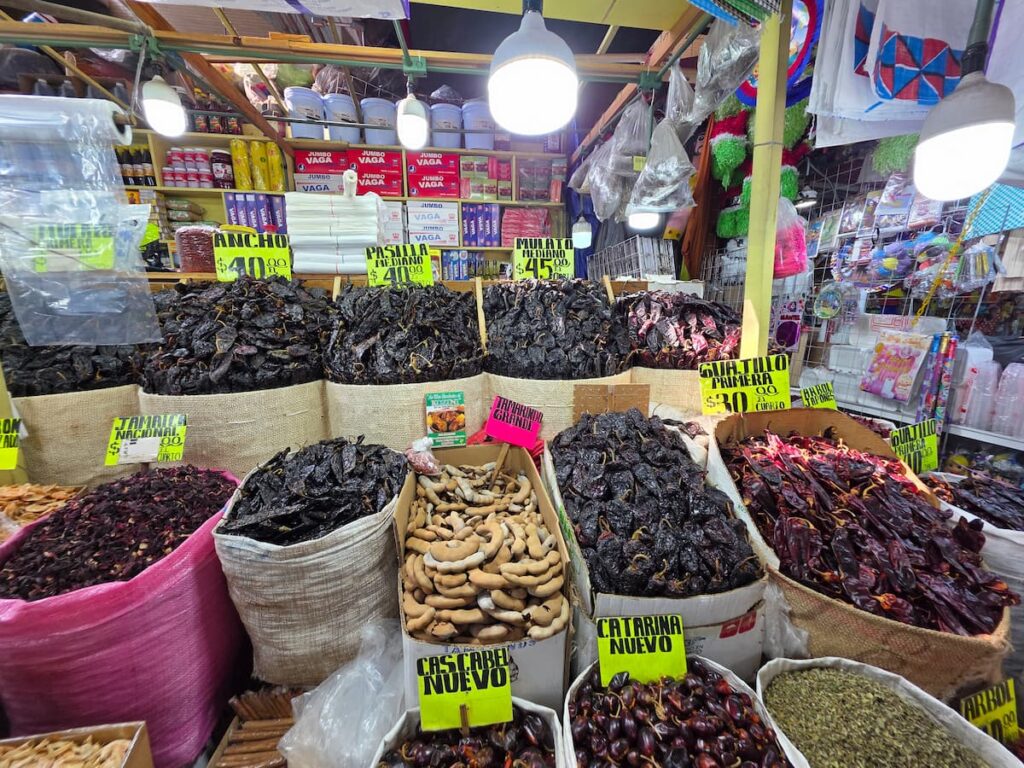
These aren’t quaint farmer’s markets. They’re serious food sourcing operations where locals shop, restaurants buy ingredients, and the sheer variety of produce, spices, meats, and prepared foods tells you more about Mexican culinary culture than any guidebook could.
Get to the markets on a weekday. Talk to the vendors. They all love to talk. Bring some Spanish, or at least the willingness to try without it. Just remember they are working and you are a tourist.
Historical and Cultural Depth You Can’t Rush
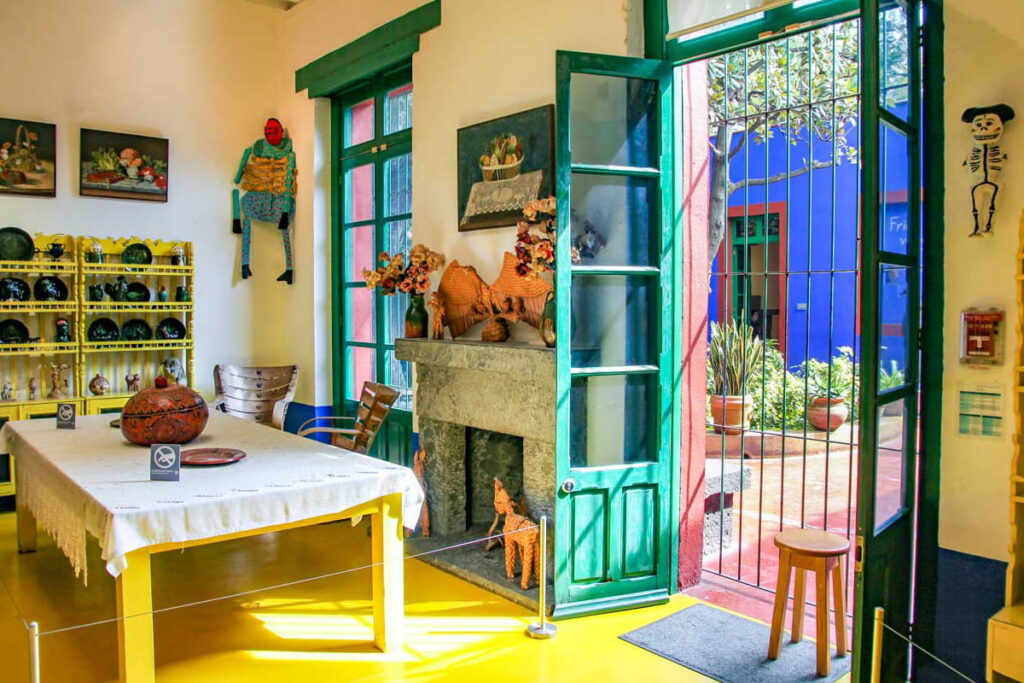
The Frida Kahlo house in Coyoacán deserves a full morning, not a rushed hour. The National Museum of Anthropology could occupy you for days—it’s one of the world’s great museums, showcasing Aztec, Maya, and other pre-Columbian cultures with a depth and quality that rivals any European institution.
The Templo Mayor ruins sit in the heart of the city—an Aztec temple complex literally beneath the modern metropolis. The Palacio de Bellas Artes. Diego Rivera murals scattered across government buildings. Chapultepec Castle overlooking the park.
Throughout the city, you encounter this layering of Spanish colonial heritage over ancient Mesoamerican foundations, all evolving into something contemporary and uniquely Mexican. It’s not just historical sites to check off. It’s a living cultural complexity that requires time to comprehend.
Each of these sections deserves its own post. They’re coming.
Experiences Beyond the Urban Core
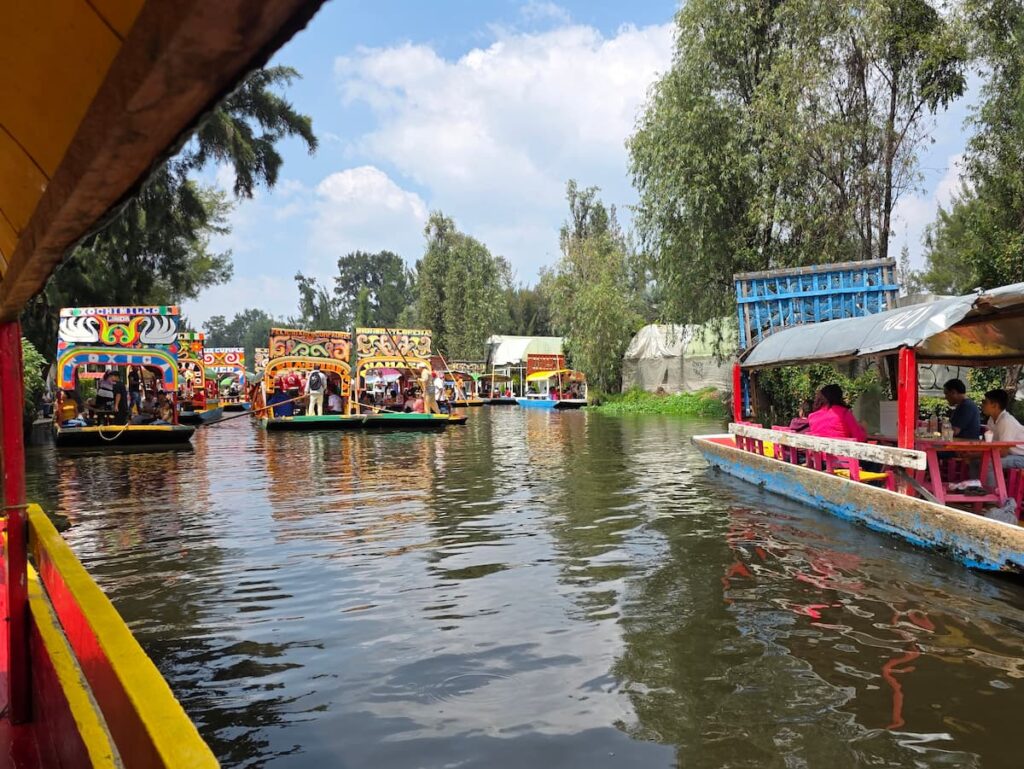
Xochimilco’s canal party boats, trajineras decorated in bright colors, floating through ancient waterways while mariachi bands play and vendors sell food from passing boats. It’s joyful, chaotic, utterly unique. Either go with friends or be prepared to make new ones.
Mountains and forests ring the city. On clear days (admittedly rare due to pollution), you can see snow-capped volcanoes from downtown. The geography alone adds a further dimension – this is a high-altitude valley city surrounded by dramatic natural features.
Day trips to Teotihuacán, Puebla, or smaller colonial towns are readily accessible. Each one could be its own multi-day exploration.
Why Mexico City Is Different From Other Major Cities
Most world capitals have a core. Paris has the Louvre, the Eiffel Tower, Notre-Dame, a handful of neighborhoods. London has its major museums, Westminster, a few distinct areas. Cover that core in a week and you’ve reasonably experienced the city.
CDMX doesn’t have a core in that sense. It has plenty of landmarks, but the richness isn’t concentrated there. It’s spread across neighborhoods, food, history, geography, all at once, and none of it adds up to a single idea of what this city is. Most visitors allocate 2-3 days as part of a broader Mexico trip, hit the obvious sites, and leave thinking they’ve seen it. They’ve seen a corner of it, and mistaken that corner for the whole.
Practical Advice for First-Timers
Pick one neighborhood and stay in it long enough to have a regular breakfast place. Roma Norte, Condesa, and Polanco each reward that kind of attention. Resist the urge to cover everything. CDMX does not reward that instinct.
Eat where there’s a line. A queue of locals at 1pm or 9pm tells you everything a review cannot. Enjoy the salsa and limes. Approach the lettuce cautiously until your stomach adjusts.
The National Museum of Anthropology is genuinely world-class and needs more time than most people give it. The Frida Kahlo house requires advance booking. Palacio de Bellas Artes is worth the entrance for the building alone.
Accept early that you will not finish this city. Save something for next time. There will be a next time.
What Mexico City Taught Me About Travel Assumptions
Mexico City demolished my assumptions about which cities deserve extended time. I’d unconsciously ranked cities by their reputation in Western travel media. European capitals got automatic respect. Major Asian cities earned consideration. Latin American cities? I’d mentally categorized them as shorter stops, places you could “do” in a few days.
CDMX taught me how wrong that framework was. This city rivals or exceeds anywhere I’ve been for cultural depth, culinary excellence, neighborhood diversity, and sheer scope. The fact that it’s often underestimated by international travelers says more about our biases than about the city itself.
It also reinforced the core lesson of my travel approach: some cities reveal themselves immediately, others take time. But a third category exists – cities so vast and layered that even extended stays only scratch the surface. Mexico City belongs in that rare third category.
I’m grateful I gave it more than that first superficial glimpse. I’m even more grateful I kept coming back. And I’m already planning my next visit.
You will have a good trip. You will also have seen almost nothing of what makes this city extraordinary. Go if that is all you have, but know what you are missing.
Enough to begin understanding the scale and depth. Not enough to exhaust it, but you will leave knowing exactly what you want to come back for next.
A city where more time always reveals more city. I have lost count of my visits. I am already planning another.
Best time to visit: October to April for cooler, drier weather. Avoid late July to September when afternoon rains are frequent. The city rewards any season for the patient visitor.
If you’ve spent time in Mexico City, what would you add?
A friend who grew up there read this and immediately started listing things I had left out.