
By the time we reached Mérida it was Saturday afternoon and we had been active for three days. The day began with Chichén Itzá at dawn, three hours walking the ruins before the heat arrived. Two hours later, lunch on the coast at Telchac Puerto, shoes still muddy from Los Colorados the day before. Another hour still to Mérida, where we were sleeping before a Sunday flight. The trip had been extraordinary and relentless in equal measure. All we needed was food and a bed for the night.
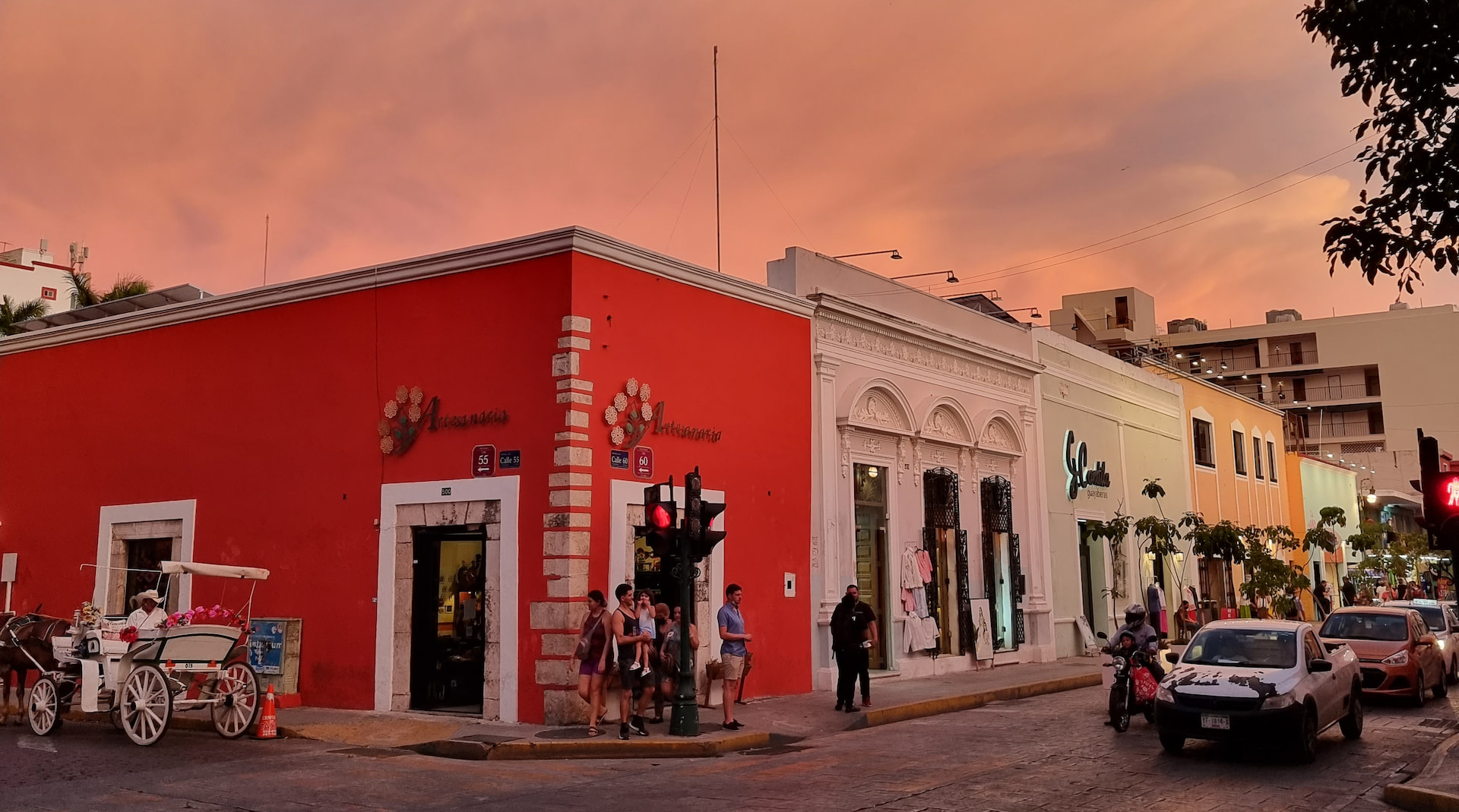
We checked into the hotel, dropped the bags, and walked out looking for nothing in particular. Somewhere along Calle 60 we passed Parque Santa Lucía and stopped. A classical ensemble was playing in the plaza. Not a performance demanding an audience, just musicians in a wooded square on a warm evening, with free bleachers set up for anyone who wanted to sit. We sat. We found a table at La Tratto Santa Lucía just off the plaza and ordered without much thought. The pasta was well prepared and flavorful, though it fell short of what you’d find in Bologna. It didn’t matter. What mattered was the particular quality of that hour: the music finding its way through the trees carried by a gentle breeze, the heat softening as the evening settled, the feeling of having nowhere to be after three days of being constantly somewhere. We hadn’t planned to linger. The city just made taking a breath feel like the obvious thing to do.
I’ve seen Chichén Itzá once. It is one of the genuine wonders of the ancient world, worth every hour it takes to get there. Mérida I’ve lost count of my visits.
The second visit was opportunistic. I needed to be in Mexico City for work, then Cancun a week later, and Mérida sat between them as an option worth testing. I rented an apartment in a converted city house and stayed for the week, working remotely and spending the evenings the way I had that first night, walking the city center, eating well, returning to the markets on the weekend. I left thinking this was something I would repeat.
Two days is enough to feel Mérida. Its rhythms, its neighborhoods, its particular pleasures reveal themselves if you let them. There is more to discover, a lovely modern shopping center on the north side, the tree-lined boulevard of Paseo Montejo with its museums and colonial mansions, an ecological park worth an afternoon. But each new discovery feels a coherent and recognizable part of Mérida, rather than a revelation. Then, like that one meal in a familiar restaurant, you may find yourself choosing to experience it again and again.
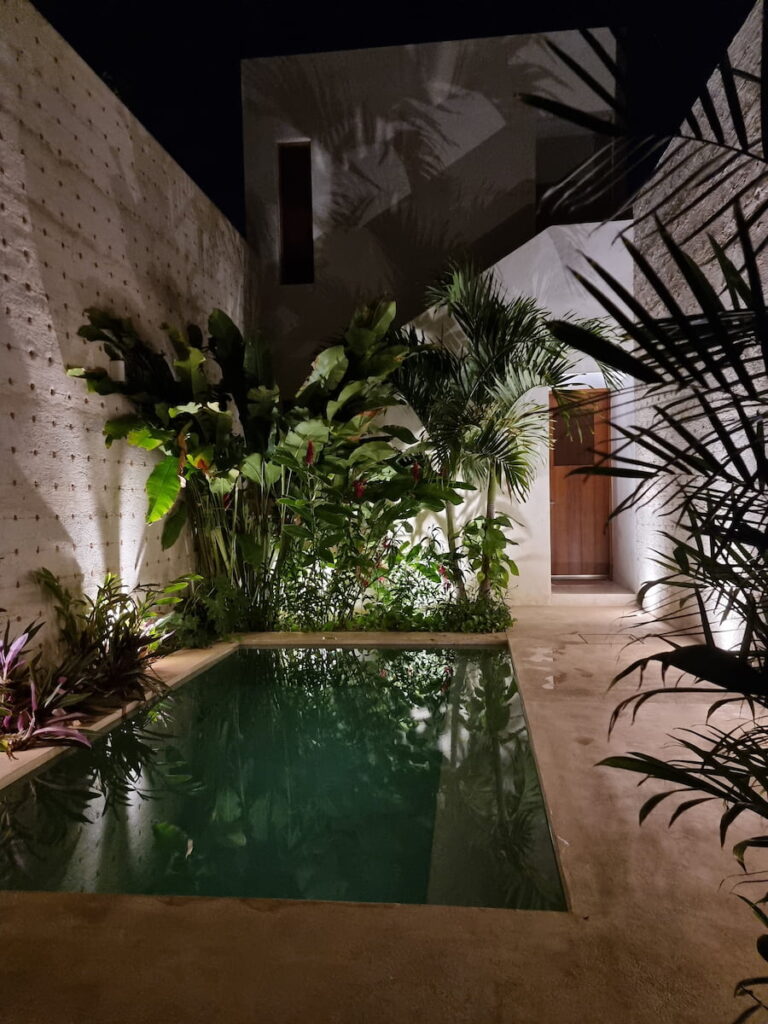
And I did repeat. Short visits in hotels, longer working stays in rented houses. Mérida has a particular residential architecture worth knowing: the older city townhouses run narrow and deep, perhaps ten meters wide and fifty long, with a house at the front, a garden in the middle, and a second apartment or loft at the rear. Many of the gardens have small pools enclosed by tall walls. You have the city at your doorstep and something private to return to. Over several visits I stayed in Paseo Montejo, Altabrisa, Centro, Santiago, San Ramón Norte, and found myself gravitating back to Santa Lucía more regularly each time. The neighborhood where I had that first accidental dinner had quietly become the one I kept coming back to.
What follows is how I spend a weekend in Mérida now. Not a first timer’s itinerary assembled from research, but a pattern that formed across several visits and kept proving itself worth repeating. Take it as a starting point. The city will adjust it to suit you.
Friday Evening
Friday evening in Mérida means a festival, most weekends, somewhere in the city. The city keeps a calendar of events across its central plazas and parks running through most of the year. Late afternoon is when I head out, walking Calle 60 between Plaza Grande and Parque Santa Ana, through Parque Santa Lucía along the way, three open spaces connected by a single street lined with colonial architecture, churches, shops, and restaurants. There’s music, and a crowd to enjoy it.
The twice yearly Noche Blanca, held in May and November, expands this across the entire central city. Galleries, museums, and cultural spaces open through the night, and when the timing lines up, the whole weekend gets built around it.
As the sun sets, Mérida cools, sometimes dramatically. Street food appears along the route, a stall and a bench is usually enough, and the evening takes it from there.
Mérida consistently ranks among the safest cities in North America. Not safest in Mexico. North America. Most people I mention this to are genuinely surprised, which says more about assumptions than about Mérida. The crowds on Calle 60 on a Friday night are families, couples, groups of friends. The city feels exactly as relaxed as it looks.
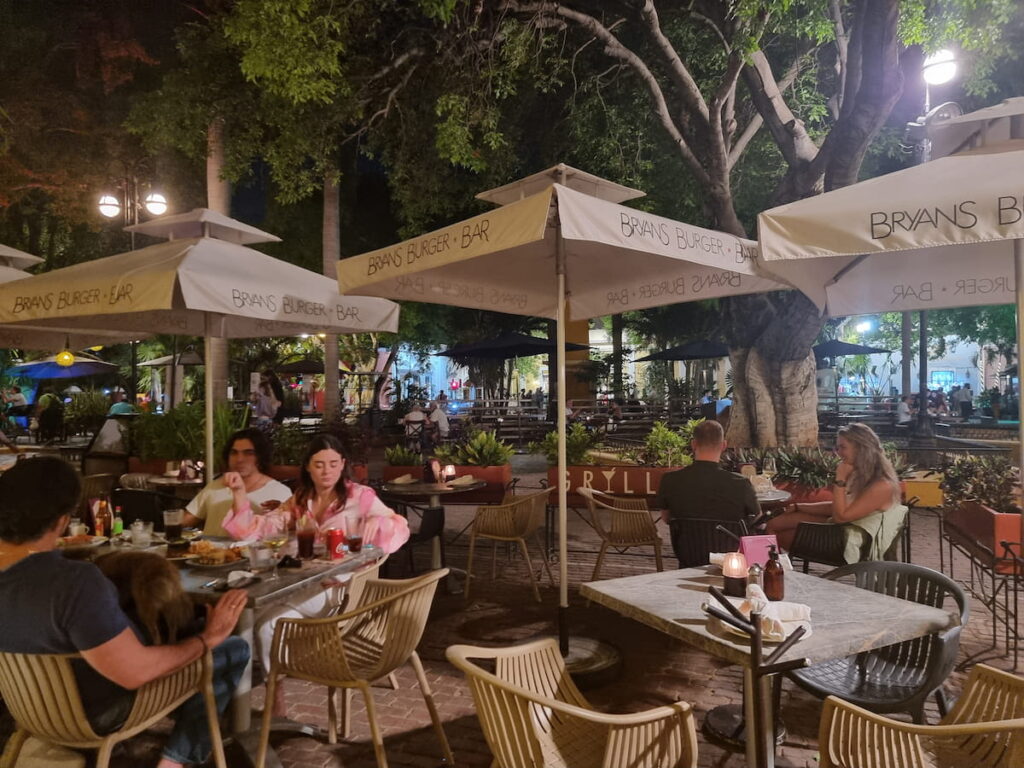
Dinner follows later, as it should in Mexico. Mérida’s restaurant scene spans both directions, deep into local Yucatecan and Mayan cuisine and outward into a surprising range of other styles done with genuine care.
Saturday Morning
Saturday morning belongs to the markets. Within a few minutes walk east of Plaza Grande sits a warren of covered markets, the largest being Mercado Lucas de Gálvez and Mercado San Benito. Stalls sell everything from fresh produce and local spices to clothing, handicrafts, and household goods. Mostly locals shopping for daily needs, with a mix of tourists finding their way through. The Mercado de Santiago sits a few blocks west, smaller and calmer, worth the short detour.
The morning disappears into this, and that’s the point. It isn’t efficient shopping. It’s wandering with occasional purpose, stopping when something catches my eye, losing track of time in a way that feels appropriate rather than frustrating.
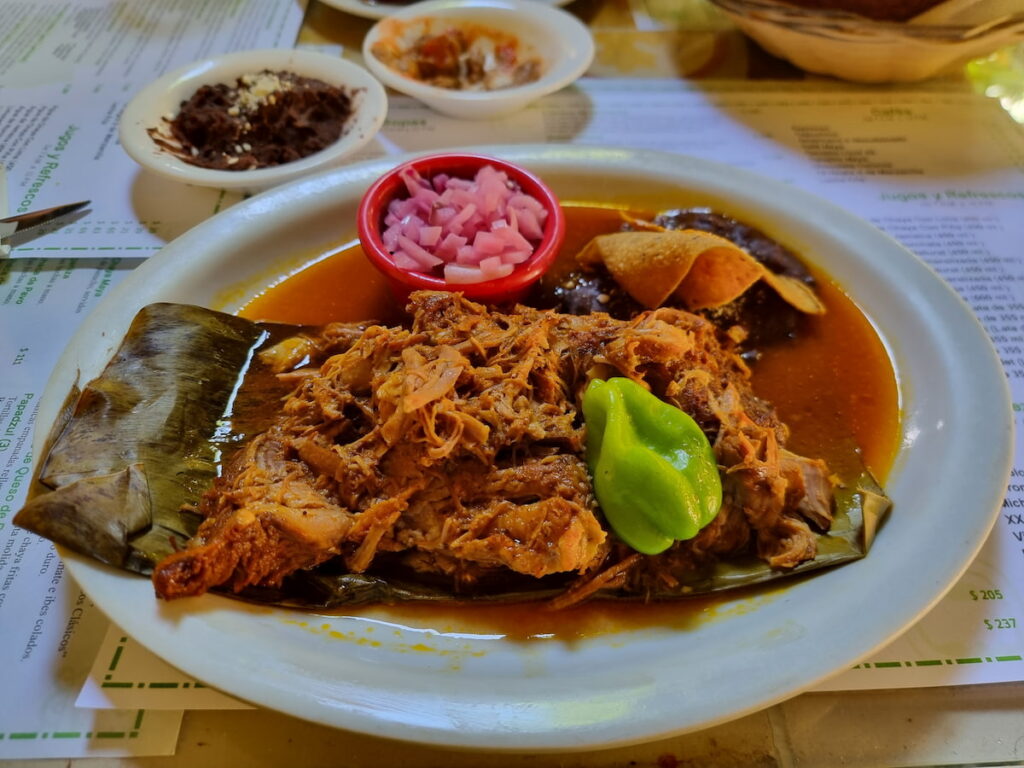
By late morning hunger arrives naturally, and the market is where I eat. Several stalls serve local food at counters with a few stools, and this is where cochinita pibil shows up as it should be, slow roasted in banana leaves, served simply. The best meals of my Mérida visits have often been the least planned.
Saturday Afternoon
By early afternoon the heat has usually won. Mérida sits in a lowland basin with little elevation to soften the sun, and from roughly April through October the midday temperature discourages ambition. This is not a flaw. It is a rhythm the city has built its day around, and fighting it is the only real mistake.
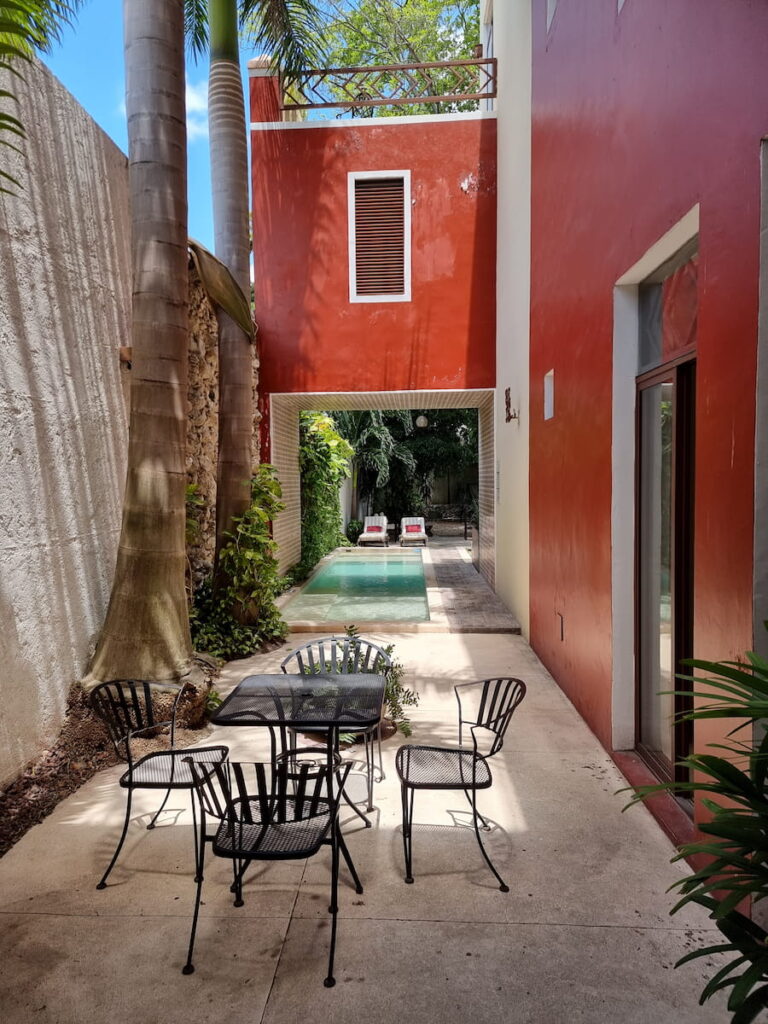
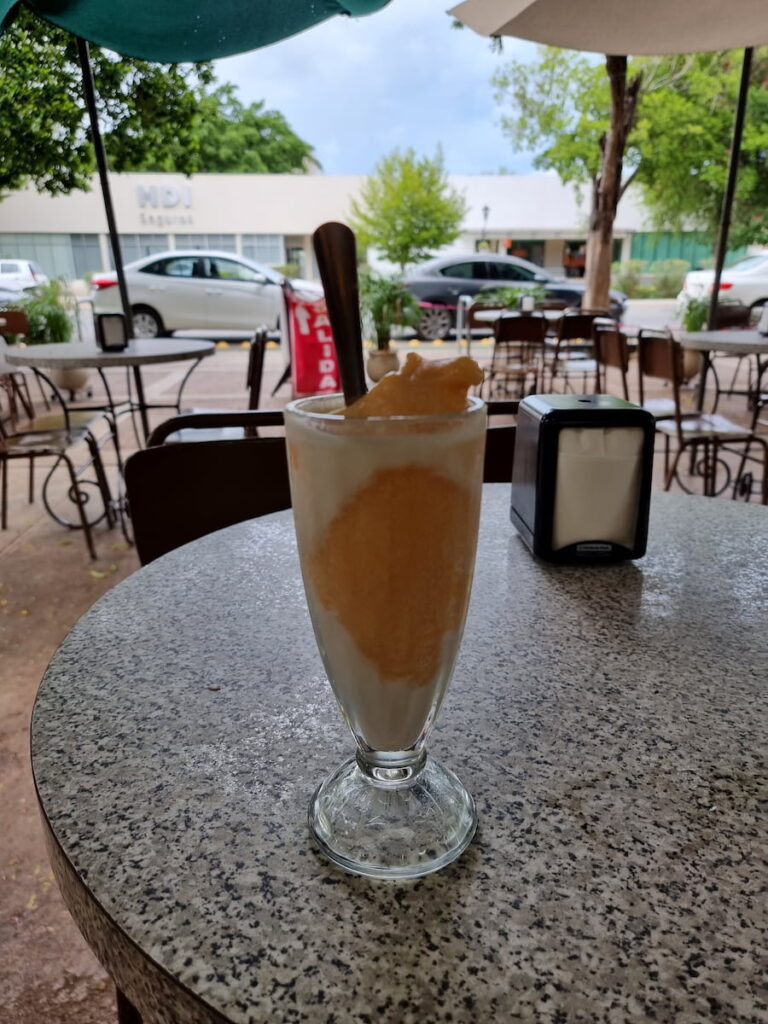
If the hotel has a pool, that’s where the early afternoon goes. If not, a champola or a chaya agua fresca does the job. The champola sits somewhere between a fruit shake and an ice cream drink, appearing at small shops and market stalls throughout the city. The chaya agua fresca is made from a leafy plant native to the Yucatán, refreshing in a way that feels calibrated to the climate, and one I’ve never found outside the peninsula. That buys some time, but Mérida’s heat doesn’t let go easily, even late in the afternoon it can still feel like the middle of the day, so eventually I look for something indoors, with air conditioning.
Museums fit that need well. Most close between five and six, but two hours is usually enough. Mérida has more museums than most cities its size, spanning pre-Columbian history, regional art, Yucatecan culture, and the henequen industry that built the city’s 19th century wealth. I tend to pick one. The Gran Museo del Mundo Maya on the northern edge of the city is the most comprehensive. The Museo de Arte Popular de Yucatán near Parque Santa Lucía is smaller and easier to absorb in a single visit.
As the afternoon cools, a cantina and botanas follow. In much of Mexico a drink order arrives with something modest alongside it, peanuts, chips, a few olives. In Mérida the tradition runs considerably deeper. Botanas here are closer to appetizers, sometimes several small plates arriving with each round, and a couple of drinks ordered unhurriedly can turn into a meal on their own. Toasted pumpkin seed paste (you will think it is refried beans), panuchos, small plates of whatever the kitchen is proud of that afternoon. El Lucero at the south end of Paseo Montejo is a personal favorite, a palapa-roofed spot with an unhurried feel and botanas worth lingering over. Any cantina where locals outnumber tourists tends to deliver.
Saturday Evening
Saturday evening returns to the table. Mérida’s restaurant scene rewards exploration in a way that justifies return visits on its own. Yucatecan cuisine is distinct from the Mexican food most visitors know, rooted in Mayan ingredients and techniques that predate the Spanish arrival. Achiote, sour orange, habanero used with restraint, slow cooking in banana leaves. A cuisine that rewards attention.
Beyond the regional, Mérida carries a surprisingly cosmopolitan food scene for a city its size. The Lebanese community that arrived in the late 19th century left a culinary mark still visible today, kibbeh and shawarma appearing on menus across the city alongside the Yucatecan staples. Good Italian, the occasional Peruvian. Not every cuisine reaches the standard of its origin, but the care is usually there.
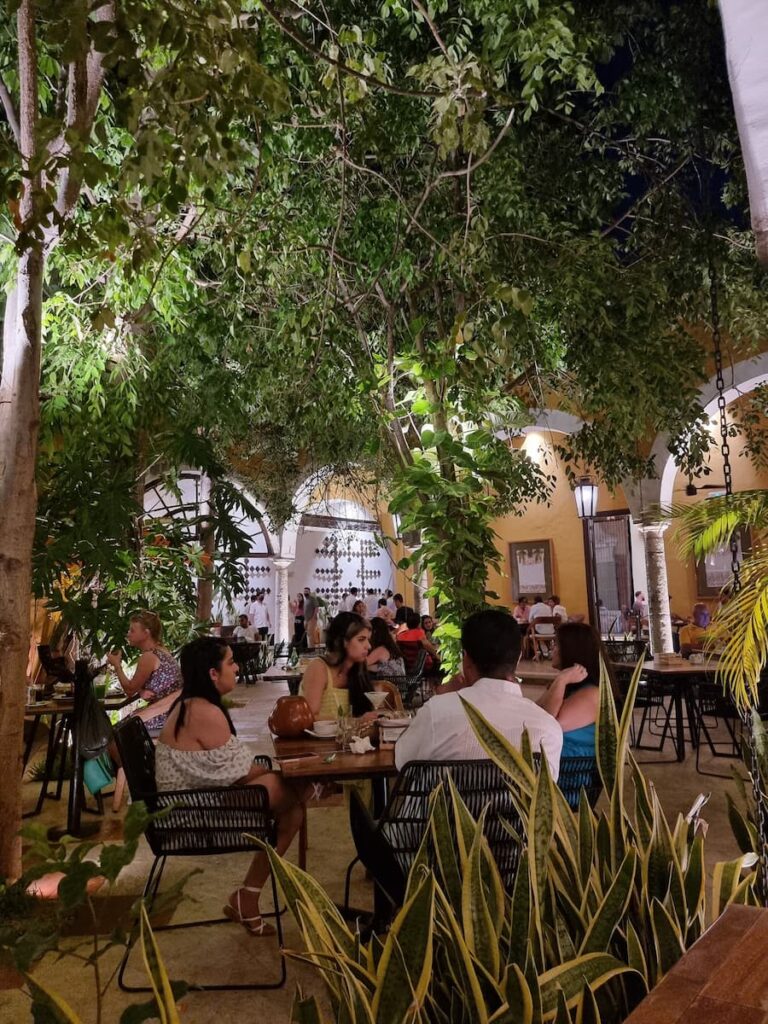
Most of the better restaurants have an open air component, a courtyard, a terrace, a retractable roof. Eating outside in the evening in Mérida, when the heat has finally relented, is one of the city’s particular pleasures. If I haven’t had cochinita pibil yet, this is when it happens. Dinner runs long. The city has nowhere it needs me to be.
Sunday Morning
Sunday morning, if there’s time before departure, belongs to the cathedral. The Catedral de San Ildefonso on Plaza Grande is the oldest cathedral in Mexico, construction begun in 1561 on stones taken from a Mayan temple that stood on the same ground. That layering of civilizations is worth sitting with.
I am not a religious person. But spaces built by devoted hands carry a spirituality that doesn’t require shared belief to feel. A Sunday morning Mass in a working cathedral is a different experience than an empty tourist visit on a Tuesday afternoon. The music, the congregation, the particular quality of light through old stone. I sit toward the back, a respectful observer, and the cathedral has never made that feel unwelcome.
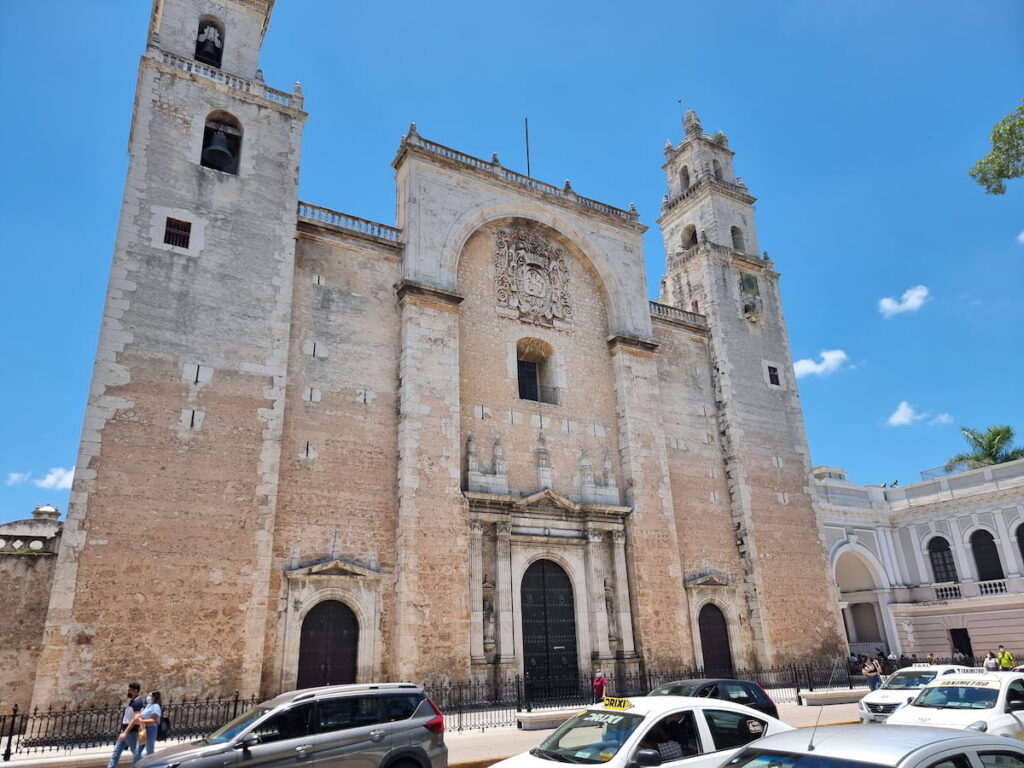
Mérida also has several smaller historic chapels within walking distance, each with its own character. When the cathedral feels too large or too crowded, one of these usually does the job instead.
Sunday Lunch and Beyond
Sunday lunch is one more chance Mérida offers before leaving. If the markets are open, that’s where I go back. If not, one of the Yucatecan restaurants near Plaza Grande tends to deliver. The meal runs long. The flight can wait a little longer.
If there’s time for extra days, there are ample options nearby. Uxmal, an hour south by car, is one of the great Mayan ruins and far less visited than Chichén Itzá. The Puuc architectural style on display there is distinct and worth the trip. The northern coast, a short drive from the city, offers the Gulf of Mexico the locals know. Progreso is the closest and most accessible. Telchac Puerto and Sisal are smaller and calmer. These are not essential additions to a Mérida visit. They are rewards for staying in the region a little longer.
Practical Advice for First-Timers
Arriving in Mérida: The airport is right at the edge of the city and an easy taxi or uber ride anywhere in town.
From Cancún: There are no direct flights. A rental car, the ADO bus and Tren Maya will all have travel time around 4 hours. The road is mostly highway; the bus is comfortable and direct; and the train is spacious and reliable. The train station is about a 30 minute taxi to downtown Mérida while the bus arrives downtown or Alta Brisa.
What Mérida Taught Me About Travel
Mérida taught me that surprising you isn’t the only thing that makes a city worth revisiting. Some cities reveal their character freely, and when that character is one you genuinely like, repetition doesn’t wear it down. The familiar meal, the known plaza, the ritual of a Friday evening on Calle 60, none of it gets old. I enjoy it every time. There is a kind of travel that isn’t about discovery. It’s about getting to experience something good again. Mérida is where I learned that.
I still eat at La Tratto when I am in Mérida. The pasta remains well prepared, the music still carries across the plaza on a warm evening. Go for two days. See if it fits. Then decide whether Mérida calls you back for another visit, or even more.
Enough to feel the city’s character completely. The markets, the plazas, the Friday evening ritual, a meal that stays with you. Mérida reveals itself freely in a weekend. The only question is whether its character fits you.
Mérida doesn’t need a week by itself. If you have more time in the Yucatán, the peninsula deserves it. Use Mérida as your base and your return point.
Mérida doesn’t fit forever for me, but it does fit a few days at a time often.
Best time to visit: November through February for cooler, drier weather. May and November bring the Noche Blanca, worth planning around if your schedule allows. July and August are hot but manageable with the right pace and a good hotel pool.